
⚡Natural Gas MarketWatch — October 2, 2026: October Opens with Softer Pricing but Strong Winter Market Fundamentals


As the energy industry moves deeper into the fall shoulder season, natural gas markets are entering a critical period where inventory levels, regional basis markets, and winter demand expectations increasingly influence pricing decisions. Thursday's trading session reflected a market searching for direction as traders assessed a storage report that largely met expectations while weather forecasts weighed on sentiment.
For commercial and industrial energy buyers, today's market environment reinforces the importance of balancing near-term softness with longer-term winter procurement planning. While prices pulled back during the session, storage inventories remain below year-ago levels and regional basis markets continue to signal tightening conditions in key Northeast markets.
📈 Market Recap: Natural Gas Drifts Lower Following Storage Report
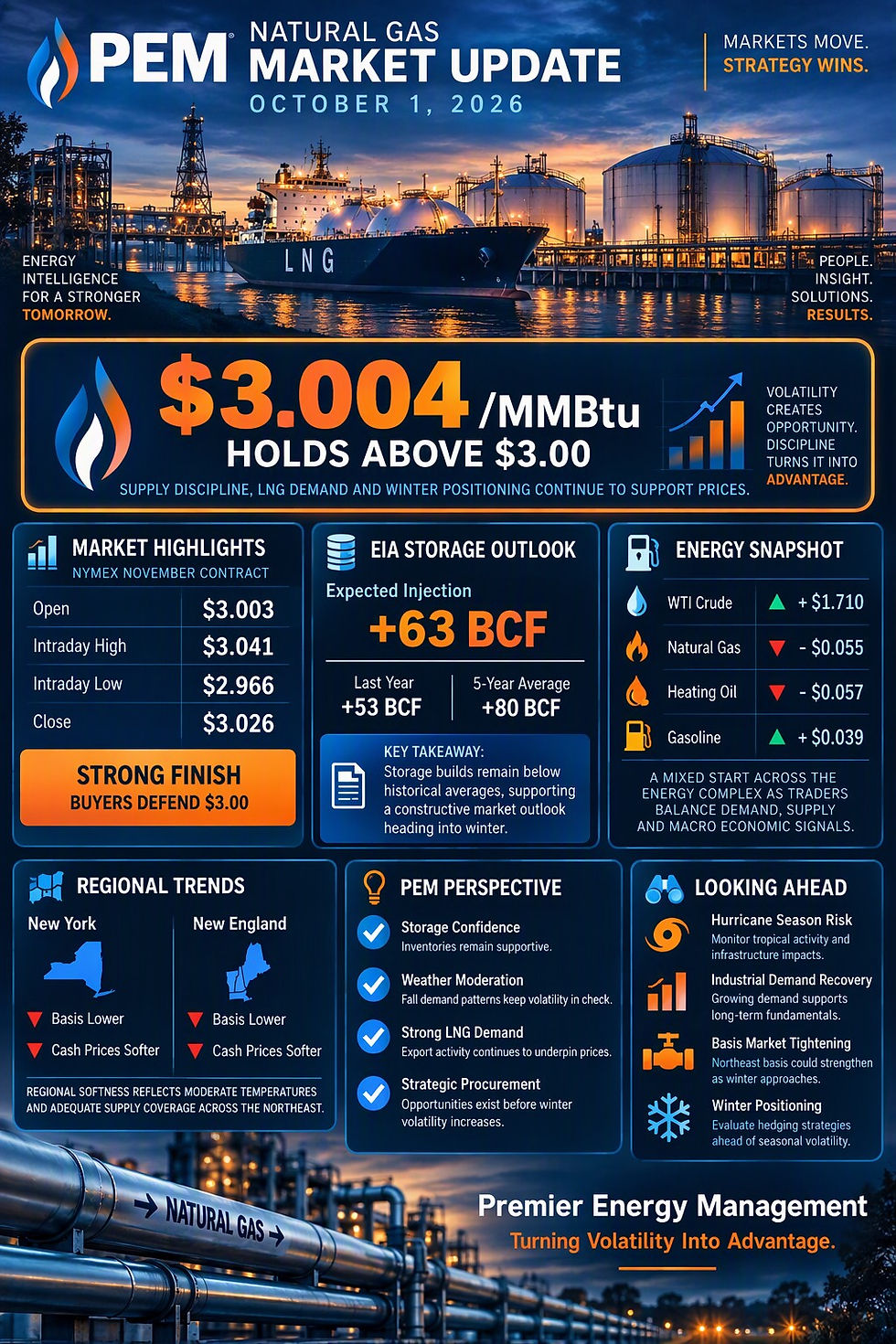
Thursday, October 1, saw the front-month NYMEX Natural Gas contract open at $3.015/MMBtu, down $0.011 from Wednesday's close of $3.026/MMBtu. During early trading, prices reached an intraday high of $3.021/MMBtu before 9:40 AM, suggesting some initial buying interest as traders positioned ahead of the weekly storage release.
As the session progressed, prices hovered around $3.005/MMBtu leading into the storage report. With inventory data arriving largely in line with market expectations, there was little immediate reaction. Instead, the market gradually weakened through the afternoon as bearish short‑term weather forecasts became the dominant driver of sentiment. The November contract ultimately settled at $2.967/MMBtu, reflecting a cautious outlook among traders despite relatively constructive storage fundamentals.
The market's inability to sustain prices above $3.00 does not necessarily signal a change in longer-term fundamentals. Rather, it reflects the seasonal challenge natural gas markets face in October, when cooling demand has largely faded, and heating demand has not yet fully emerged.
🛢 EIA Storage Report Signals Balanced Fundamentals
The most closely watched event of the week was the latest EIA Natural Gas Storage Report.
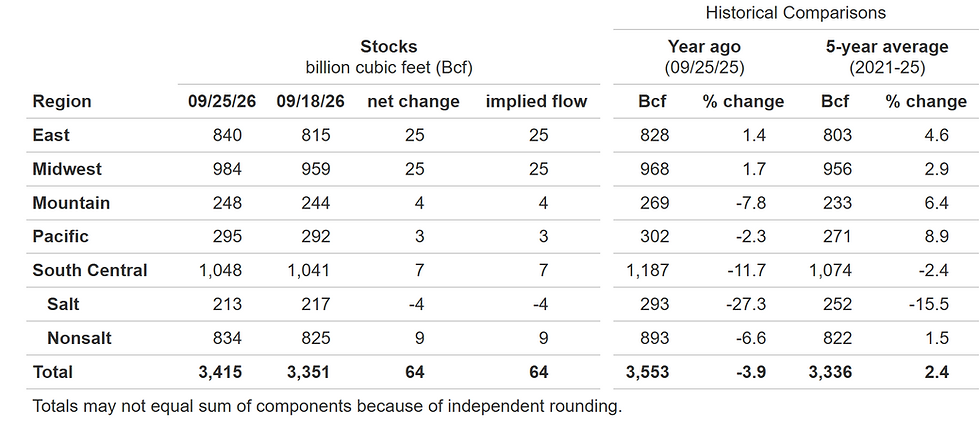
The report showed a 64 BCF injection into storage for the week ending September 25, virtually matching the market expectation of 63 BCF.
Current storage statistics include:
Weekly Injection: +64 BCF
Market Estimate: +63 BCF
Total Working Gas Storage: 3,415 BCF
3.9% Below Last Year
2.4% Above Five-Year Average
These figures present a balanced picture. Inventories remain comfortably above historical norms, providing supply confidence heading into winter. At the same time, storage levels remain below last year's inventory total, preventing excessive bearish pressure from developing.
For energy buyers, this storage profile suggests that winter pricing risks remain manageable but have not disappeared. Weather remains the single largest wildcard as the market transitions toward heating season.
⚡ Broader Energy Market Snapshot
Natural gas was not alone in facing pressure.
As of 6:25 AM ET Friday morning, broader energy markets were experiencing declines across multiple commodities:
WTI Crude Oil: ▼ $3.200
Natural Gas: ▼ $0.031
Heating Oil: ▼ $0.141
Gasoline: ▼ $0.107
This broader weakness suggests energy traders are responding to a combination of weather-driven demand concerns and profit-taking following recent market gains.
Cross-commodity softness can often create opportunities for organizations evaluating energy procurement strategies across multiple fuel categories.
🌎 Regional Basis Markets Continue Diverging
Basis markets remain one of the most important indicators for businesses operating across the Northeast.
New York Markets
New York basis values were reported as unchanged across all seasons, demonstrating continued stability throughout the region. Cash prices, however, were reported higher in New York, indicating localized demand support despite overall market weakness.
New England Markets
New England basis values moved higher across all seasons, highlighting ongoing infrastructure and reliability concerns as winter approaches. Despite stronger basis values, cash prices were reported lower in New England, illustrating the unique dynamics currently affecting regional supply and demand balances.
Strategic Implications
For buyers throughout the Northeast, these regional movements reinforce the importance of basis management. Commodity prices often capture headlines, but regional basis exposure can significantly influence total delivered energy costs during winter months.
⚪ PEM Perspective: Turning Volatility Into Advantage
At Premier Energy Management, we view today's market as a strong example of why disciplined procurement remains critical.
Several key themes continue to emerge:
Storage Remains Constructive
Storage inventories are above the five-year average while remaining below year-ago levels. This combination supports market stability without creating excessive supply concerns.
Winter Planning Should Remain a Priority
October often provides a valuable opportunity for organizations to evaluate winter exposure before weather becomes a dominant market driver.
Regional Markets Matter
New England's stronger basis values reinforce the importance of monitoring regional risk rather than focusing exclusively on headline NYMEX pricing.
Market Flexibility Creates Opportunity
Periods of softening prices can create attractive opportunities for organizations pursuing budget certainty and cost-management objectives.
Our team continues monitoring:
NYMEX natural gas futures
Storage trends
Regional basis spreads
LNG export activity
Production levels
Winter weather forecasts
to help clients navigate changing market conditions with confidence.
🔮 Looking Ahead
Several factors are likely to influence natural gas prices throughout October:
Winter Weather Development
The market's focus will increasingly shift from shoulder-season demand to heating-season expectations.
Storage Trajectory
Future injections will help determine how prepared supply levels are entering winter.
LNG Export Activity
Export demand continues to provide meaningful support for domestic natural gas fundamentals.
Regional Basis Markets
New England and Northeast basis values remain key indicators of potential winter volatility.
Economic Conditions
Broader trends in industrial activity and energy demand will continue influencing commodity markets.
Final Thoughts
Natural gas prices pulled back following a storage report that largely matched expectations, but underlying fundamentals remain balanced. Storage inventories remain healthy, regional basis markets continue signaling important winter considerations, and market participants are increasingly shifting focus toward the heating season.
For organizations evaluating procurement strategies, now remains an important period for assessing risk, securing budget certainty, and preparing for potential winter volatility.
#NaturalGas #EnergyMarkets #PEMInsights #MarketWatch #EnergyStrategy #PremierEnergyManagement #NYMEX #NaturalGasStorage #EIAStorageReport #EnergyProcurement #EnergyRiskManagement #BasisMarkets #CommercialEnergy #IndustrialEnergy #LNG #EnergyAnalytics #CommodityMarkets #WinterOutlook #MarketVolatility #StrategicProcurement #SupplyChainResilience #EnergyLeadership
Winter is almost here...
Would you like a review of your facility's Winter Energy strategy? We are here to help!

Comments